

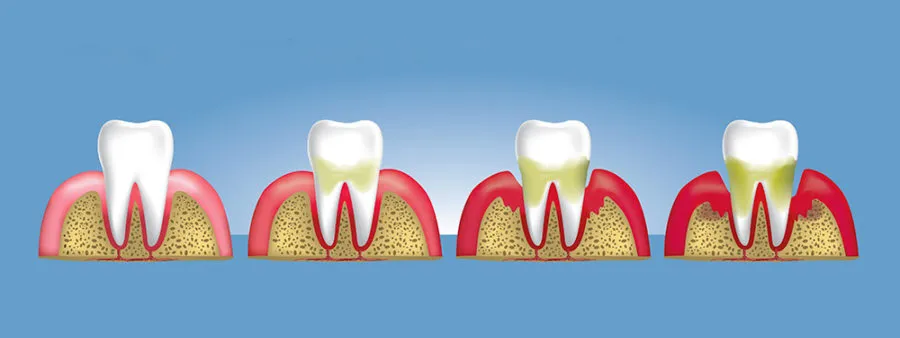
When the gingival sulcus deepens, what is known as a gum pocket is formed.
The gingival sulcus is the space found on either side of the tooth, between the tooth surface and the gum tissue. When the periodontium is healthy, this sulcus measures between two and three millimetres, but in the presence of certain conditions it can exceed four millimetres, thus becoming a site of bacterial proliferation.
The deeper the sulcus, the harder it will be to carry out proper oral hygiene at home, with greater exposure to the risk of diseases of the oral cavity.
Main causes
The main cause of gum pockets is certainly the build-up of bacterial plaque, which can lead to the destruction of the sulcular epithelium (the lining of the soft-tissue wall inside the gingival sulcus); to defend itself, the epithelium recedes, leaving the tooth root exposed. Once the gum has come away from the tooth, the bone is also resorbed, creating bony pockets in which plaque and tartar continue to build up, thus favouring the progression of another serious problem: periodontitis.
Periodontitis is, in fact, an infection of the gums which, at an advanced stage, is responsible for tooth mobility or even tooth loss.
Other possible causes of pockets can be:
- Smoking, which destroys the cells responsible for maintaining the supporting tissues of the teeth
- Stress, which lowers the immune defences
- Hormonal changes (menopause, pregnancy and puberty)
- Diabetes
- Drug therapies such as antidepressants, contraceptives, corticosteroids etc.
Symptoms and diagnosis
Gum pockets can form without obvious symptoms.
For this reason, when you start to notice:
- swollen and bleeding gums
- bad breath
- tooth sensitivity
- gum recession
…it is advisable to see a periodontist.
In this case periodontal probing will be carried out, which involves inserting a periodontal probe and running it around the circumference of each tooth. This instrument makes it possible to check the condition of the dental pockets by measuring their depth precisely.
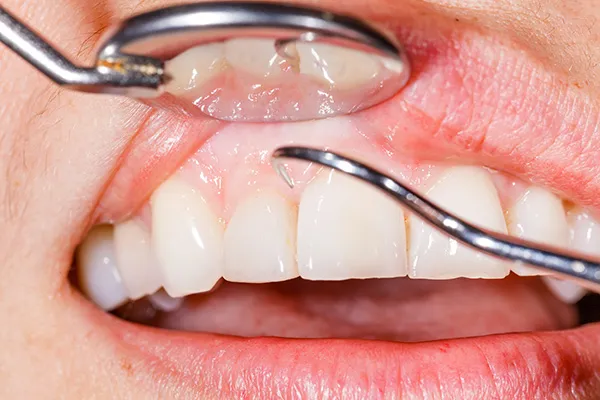
All the measurements taken will be recorded on a chart of the dental arches so that patients can see the state of health of their mouth with their own eyes. Once the diagnosis has been made and treatment carried out, it is advisable for the patient to repeat the probing once a year to avoid any relapse.
Remedies for pockets
- Gingival curettage
- Periodontal surgery
If periodontal pockets are less than 5 mm deep, gingival curettage is used. This treatment consists of removing the tartar and bacterial plaque accumulated in the periodontal pockets below the gum; it is carried out under local anaesthesia using specific instruments (called curettes) that scrape the gum wall.
If they exceed 6 mm, on the other hand, periodontal surgery is needed to remove the bacteria at the bottom of the pockets and restore the stability of the teeth, thus improving general health.
Periodontal surgery makes it possible to eliminate gum inflammation and cure periodontitis completely.
The best defence against the formation of gum pockets is certainly prevention.
You need to carry out proper, careful oral hygiene every day, using dental floss and mouthwash, book a professional cleaning every 6 months and maintain a healthy lifestyle by following a balanced diet.
You can find out how we do this at the practice on the page about teeth cleaning and oral hygiene.